
Storage is one of the easiest places for research materials to lose consistency. Peptides can be sensitive to moisture, oxygen, light, repeated temperature changes, and the conditions used after reconstitution. A good storage workflow does not need to be complicated, but it does need to be deliberate.
This article is written for controlled laboratory research workflows only.
Keep lyophilized material dry and cold
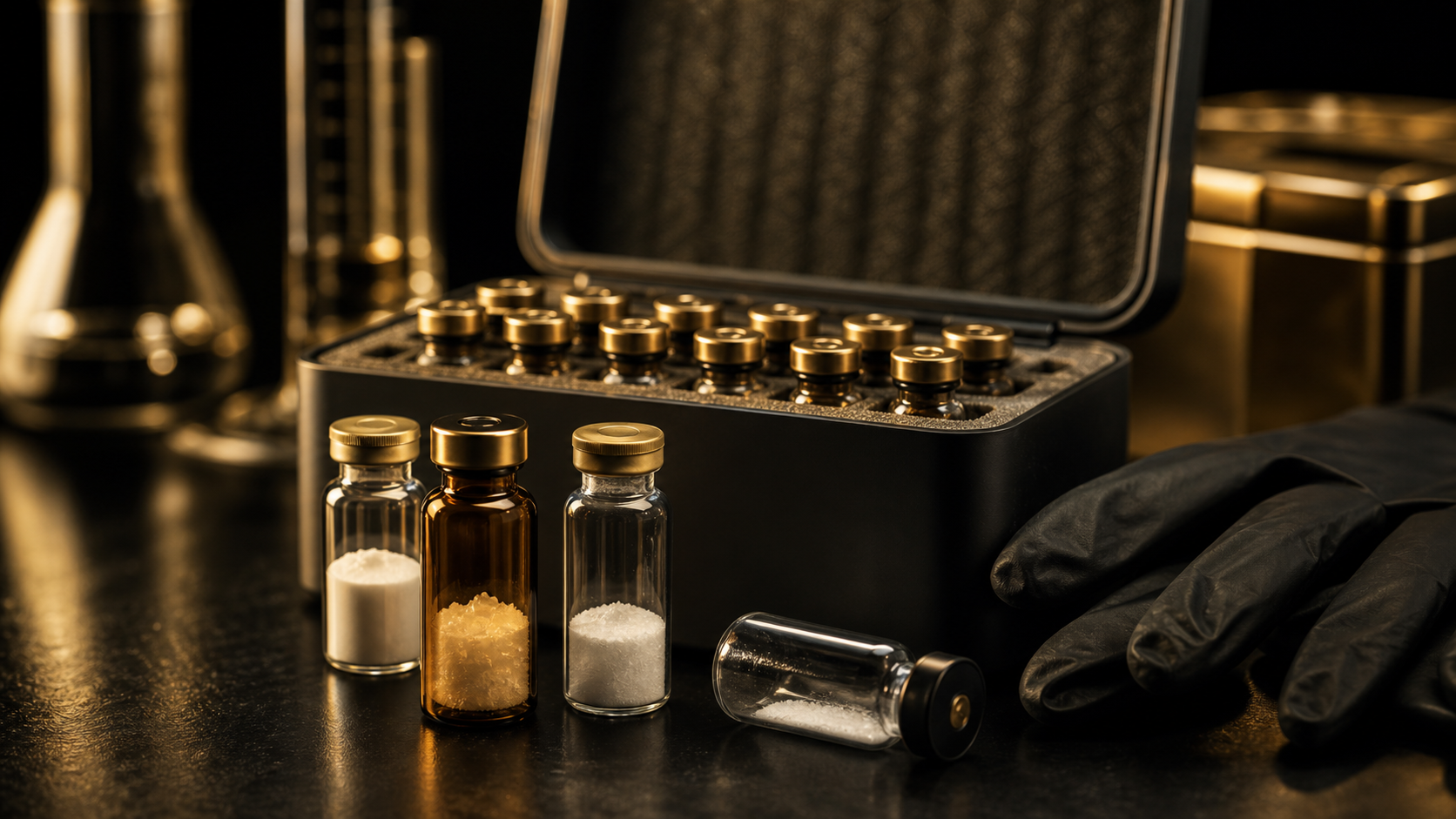
Many peptide suppliers ship peptides in lyophilized form because dried material is generally more stable than material held in solution. Common handling guidance from peptide suppliers recommends cold storage for lyophilized peptides, protection from bright light, tightly capped vials, and dry conditions.
Moisture matters. Some peptide sequences are hygroscopic, meaning they can absorb water from the air. Opening a cold vial immediately can also introduce condensation. For that reason, labs often let sealed vials equilibrate before opening and keep remaining material capped and dry.
Reduce repeated freeze-thaw cycles
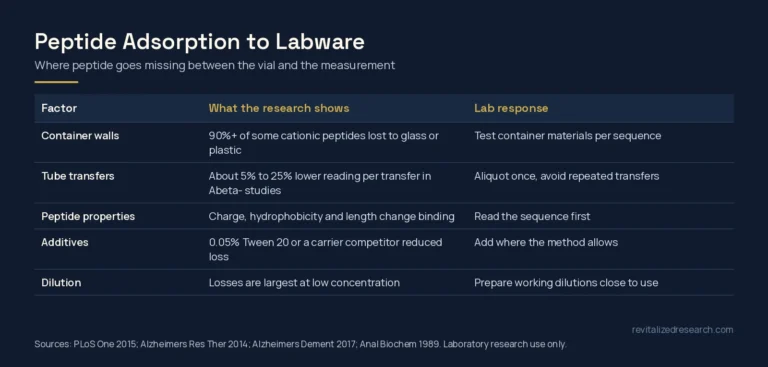
Repeated thawing and refreezing is a recurring warning in peptide handling guidance. A practical way to reduce that stress is aliquoting: divide material into research-sized portions so the same stock does not have to be opened, warmed, and frozen again and again.
Aliquoting is not only about temperature. It also reduces air exposure, moisture exposure, and repeated handling of the original vial. Those small workflow choices can make documentation and repeatability cleaner over time.
Be more cautious with peptide solutions
Peptides in solution are usually less stable than lyophilized material. Stability depends on the peptide sequence, concentration, solvent, pH, temperature, and contamination control. Some residues are more oxidation-prone, and some peptides are harder to dissolve without changing conditions.
For research workflows, the safest habit is to record the preparation date, solvent or buffer system, concentration, aliquot plan, and storage condition. That record gives future experiments context if results shift between batches or preparation dates.
A simple lab storage checklist
- Store lyophilized peptides cold, dry, sealed, and away from bright light.
- Let sealed vials equilibrate before opening to reduce condensation risk.
- Aliquot based on planned experimental use.
- Avoid repeated freeze-thaw cycles.
- Record solvent, concentration, date, and storage condition for solutions.
- Review sequence-specific notes when available.
Research-use reminder: Products should be matched with their documentation and used only within controlled laboratory research protocols.